
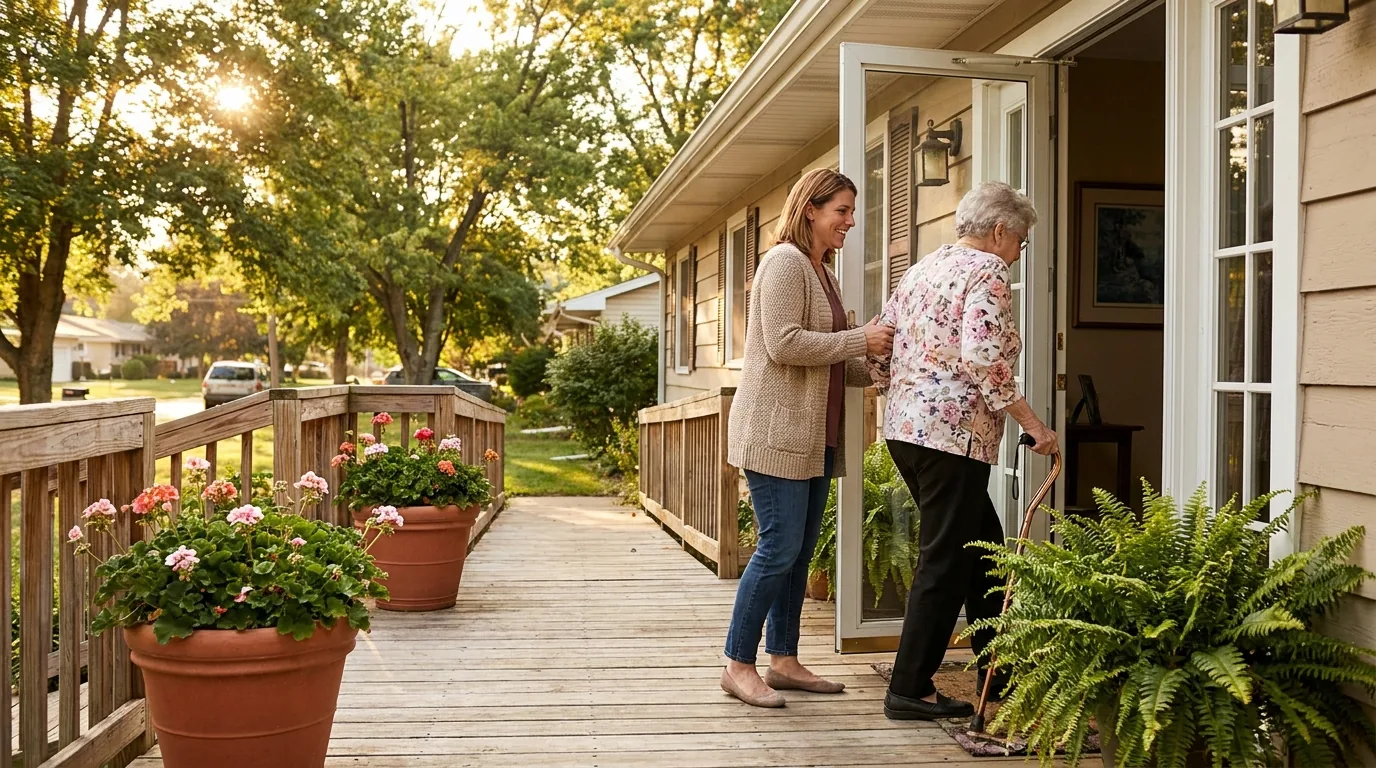
The short answer: the home modifications that matter most for aging in place are a no-step entry, wider doorways, a curbless shower with grab bars, brighter lighting, and a main-floor bedroom. Grab bars ($200–$350) and a wheelchair ramp ($1,100–$3,600) buy the most safety per dollar; a whole-home accessible remodel runs about $18,000–$75,000.
Your parent’s first night in their new room should feel like relief, not risk. Then you watch them grab the doorframe to step over the tub wall, or stall at the foot of the stairs, and suddenly you see your house the way their body does.
Which everyday corner of your home is most likely to send them to the ER? Usually it’s the ordinary stuff: a slick tub, a dark hallway, one step at the door. The right home modifications for aging in place head off many of those falls, and they cost less than most families expect.
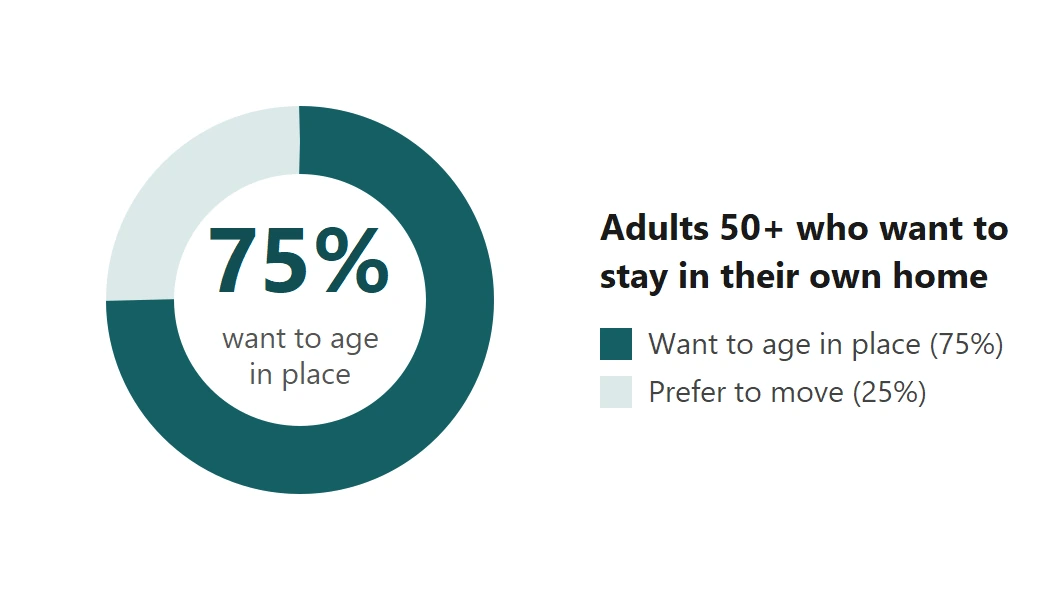
In 2024, an AARP survey found that 75% of adults age 50 and older want to stay in their current home as they grow older.[1] More families are making room, too. The share of Americans in multigenerational households climbed to 18% by 2021, more than double the 1971 level.[2]
This guide walks your home room by room, with real 2026 costs and the funding options that actually help. Where do you get the most safety for the least money? Start here.
Key Takeaways
- In 2024, 75% of adults 50+ said they want to age in place in their current home (AARP).[1]
- Falls are the leading cause of injury for adults 65+, and about 1 in 4 fall each year (CDC).[3]
- Fewer than 4% of US homes have all three core features: single-floor living, a no-step entry, and wide halls (Harvard JCHS, 2023).[4]
- Grab bars (about $200 to $350 each) and a wheelchair ramp (about $1,100 to $3,600) give the most safety per dollar; a full remodel can run $18,000 to $75,000.
- Original Medicare does not pay for home modifications. Look to Medicaid HCBS waivers instead.
What Are the Most Common Home Modifications for Aging in Place?
The highest-impact home modifications for aging in place are a no-step entry, wider doorways, a curbless shower with grab bars, brighter lighting, a main-floor bedroom, and a way to skip the stairs.
In 2023, the Harvard Joint Center for Housing Studies reported that fewer than 4% of US homes combine single-floor living, a no-step entry, and wide halls.[4]
That gap is why a little planning goes a long way. Most homes need the same core upgrades, and you can stage them over months instead of all at once. Here is the room-by-room checklist this guide follows:
- Entrance: no-step entry, ramp, wider doorways, lever handles.
- Bathroom: grab bars, curbless shower, comfort-height toilet, non-slip floor.
- Bedroom and living areas: main-floor bedroom, smooth flooring, better lighting.
- Stairs and floors: stair lift, through-floor home elevator, or a platform lift.
- Costs and funding: budget by priority, then tap grants and waivers.
From our projects: The changes families skip most often are the cheap ones. Lever handles, brighter bulbs, and a grab bar by the toilet cost little, take an afternoon, and prevent the everyday slips that send people to the ER. We tell clients to knock those out first, then plan the bigger work.
Start at the Entrance: Ramps, No-Step Entry, and Wider Doorways
The front door is the first barrier, and often the easiest to fix. For wheelchairs and walkers, doorways generally need at least 32 inches of clear width, with hallways around 36 inches, the widths widely referenced from the ADA standards.[5] Treat these as universal design targets for a home, not a legal rule.
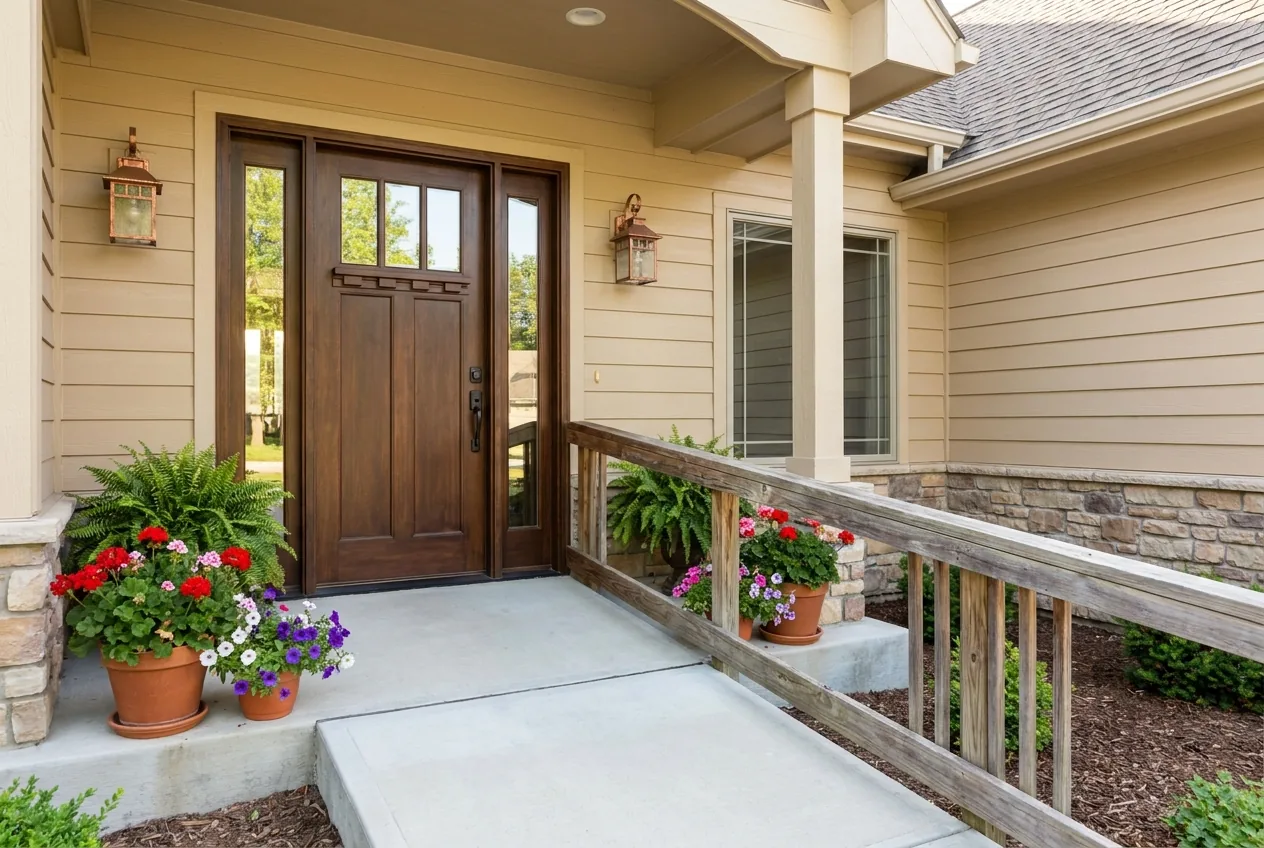
A ramp or a no-step threshold removes the trip hazard at the door. Angi priced wheelchair ramp installation at roughly $1,122 to $3,594 in 2026, averaging about $2,292, depending on length and materials.[6] A short modular ramp costs far less than a long custom-built ramp.
Widening a doorway is the next common fix. Angi’s 2026 data pegs most doorway-widening projects near $1,200, though a load-bearing wall that needs a new header pushes the price higher.[7] Swap round knobs for lever handles while you are at it, since arthritic hands grip them far more easily.
How Do You Make a Bathroom Safe for an Aging Parent?
The bathroom is one of the highest-risk rooms in any home, so an accessible bathroom remodel is where safety spending pays off first. Falls are the leading cause of injury for adults 65 and older, and about 1 in 4 older adults fall each year, the CDC reports.[3] Wet, hard surfaces and a high tub wall are a bad mix.
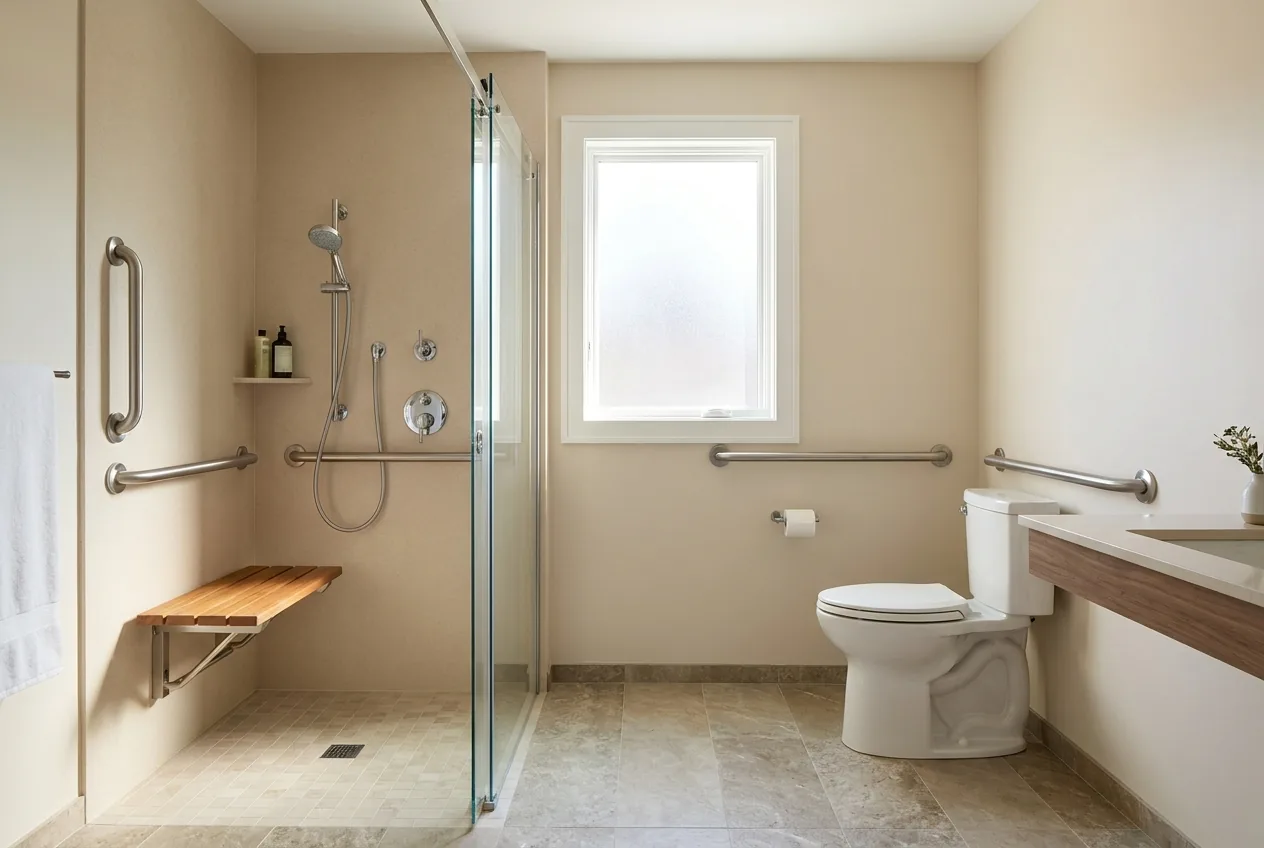
Grab bars are the single best value in the house. HomeGuide’s 2026 pricing put professional grab bar installation at about $200 to $350 per bar, and the per-bar price drops when several go in during one visit.[8] Anchor them into studs by the toilet and inside the shower.
A curbless, zero-threshold shower lets a walker or wheelchair roll straight in. Angi’s 2026 figures put a walk-in shower around $6,000 to $12,000, with an average near $9,000 for a full curbless build.[9] Add a fold-down seat and a handheld sprayer.
Prefer a soak? A walk-in tub with a watertight door runs about $2,500 to $8,000 installed on average, with premium jetted models climbing higher.[10] It is a comfort choice, while a curbless shower is usually the more wheelchair-friendly one.
Set Up a Main-Floor Bedroom and Safer Living Spaces
A main-floor bedroom and bathroom can remove the stairs from your parent’s daily routine entirely. That matters, because single-floor living is one of the three core accessibility features the Harvard Joint Center found in fewer than 4% of US homes in 2023.[4] A den or office often converts easily.
Flooring is the quiet hazard. Thick rugs and raised thresholds catch feet and wheels, so switch to low-pile carpet or slip-resistant vinyl and remove loose mats. Keep transitions between rooms as flat as you can.
Lighting does more than it gets credit for. Aging eyes need more light to judge depth and edges, so add bright, even fixtures, motion-sensor night lights, and switches your parent can reach from the bed. These universal design touches help everyone in the house, not just the newest resident.
How Do You Handle Stairs and Multiple Floors?
If the bedrooms or the only full bathroom sit upstairs, you have three proven options: a stair lift, a through-floor home elevator, or a vertical platform lift. HomeGuide put a straight stair lift at about $2,000 to $8,000 in 2026, while a curved, custom-rail model runs roughly $10,000 to $15,000.[11]
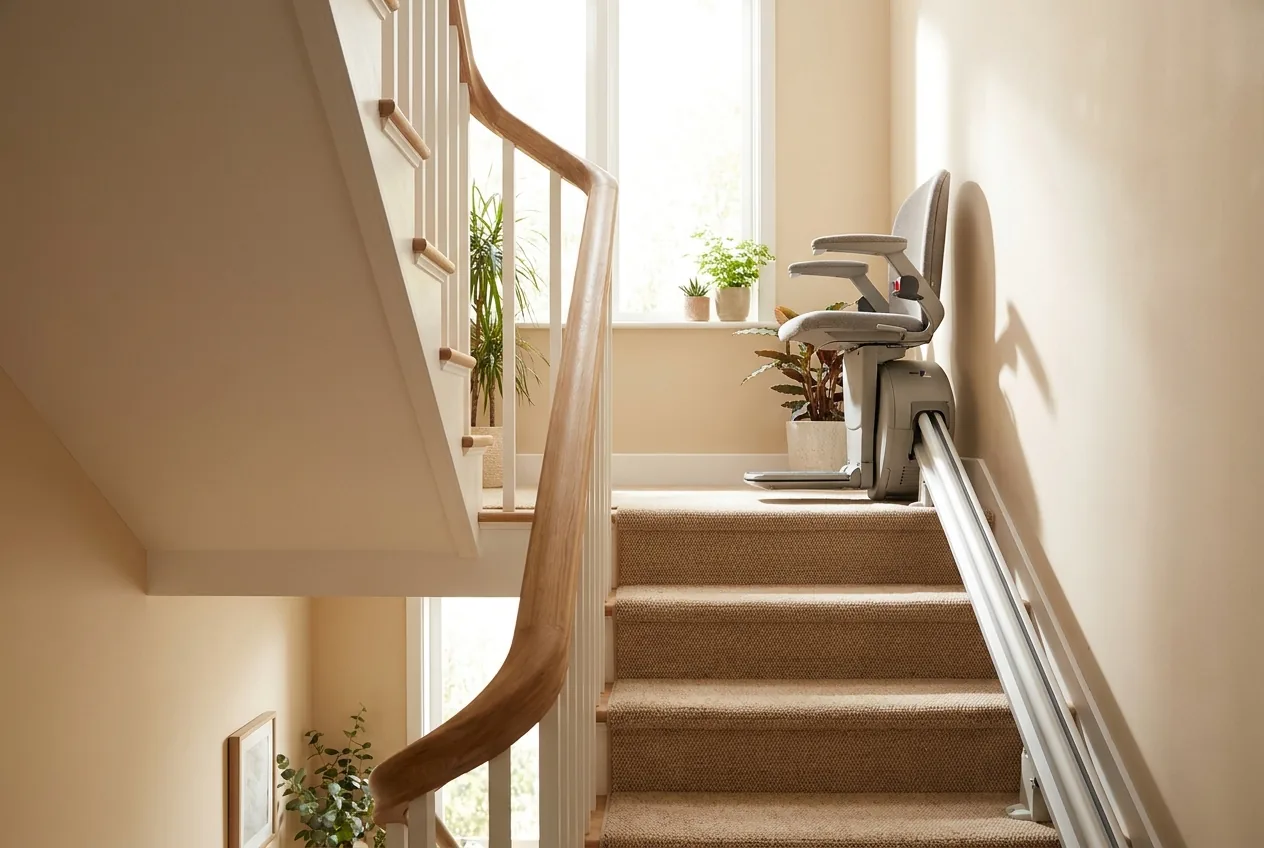
Want to move a wheelchair and its user between floors? A residential elevator or a through-floor lift does that. Expect roughly $30,000 to $60,000 installed for a two-stop home elevator, with basic units starting near $25,000.[12] It is the priciest option and the most future-proof.
Manufacturers like Savaria build straight and curved stair lifts, vertical platform lifts, and through-floor home elevators designed for private homes. Their home accessibility guide is a useful place to compare models before you get quotes.
In our remodels, the smart move is to plan for the lift before you finish the space. Framing an oversized closet stacked on two floors now makes a future through-floor elevator far cheaper than cutting into a finished home later.
How Much Do Aging-in-Place Home Modifications Cost?
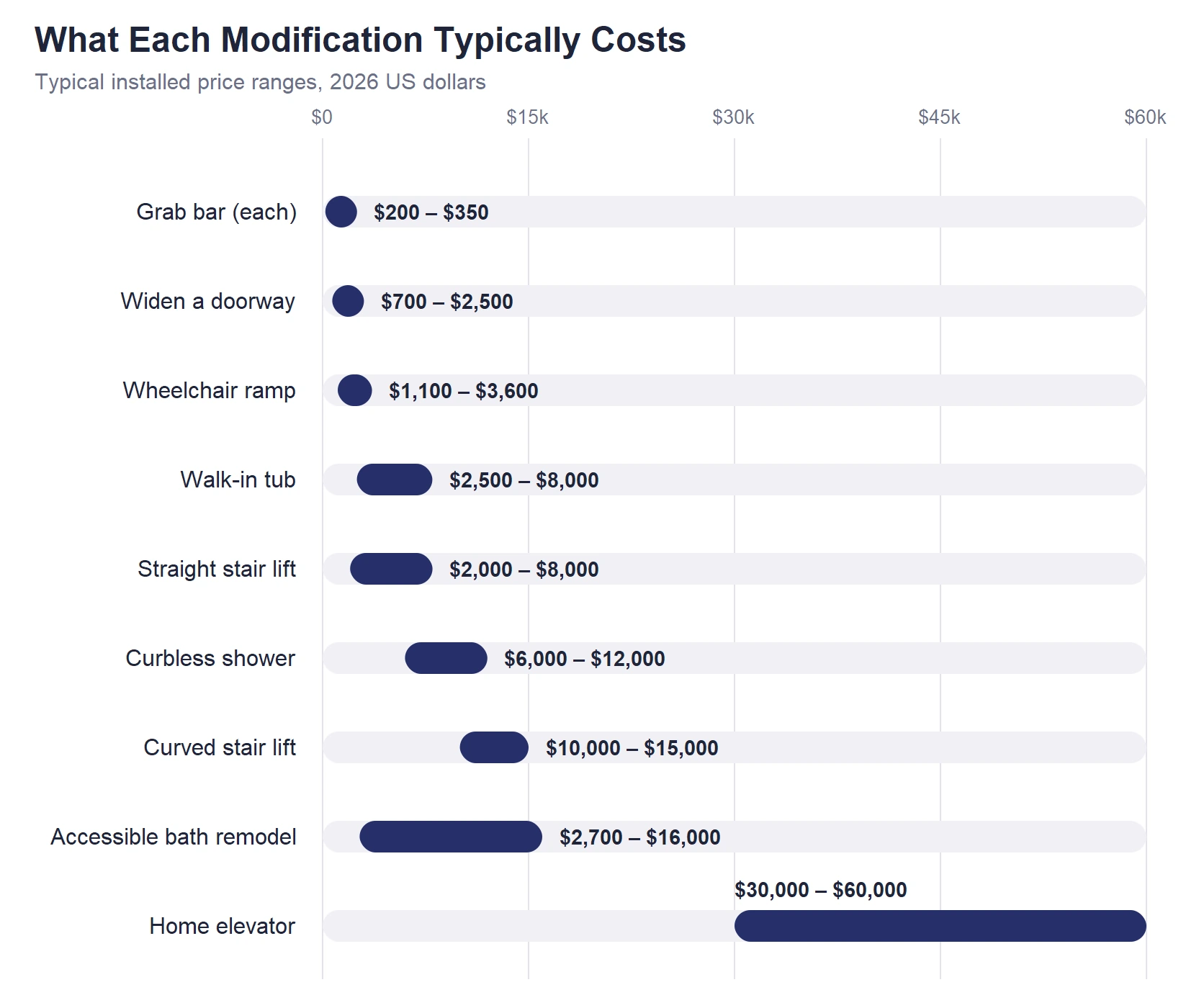
Costs swing widely because “accessible” can mean a $200 grab bar or a $60,000 elevator. Angi estimated in 2026 that making a home wheelchair-accessible runs about $2,000 to $75,000, with small individual fixes near $700 to $8,000 and a whole-home remodel closer to $18,000 to $75,000.[13]
| Modification | Low | High |
|---|---|---|
| Grab bar (each) | $200 | $350 |
| Widen a doorway | $700 | $2,500 |
| Wheelchair ramp | $1,100 | $3,600 |
| Walk-in tub | $2,500 | $8,000 |
| Straight stair lift | $2,000 | $8,000 |
| Curbless shower | $6,000 | $12,000 |
| Curved stair lift | $10,000 | $15,000 |
| Accessible bath remodel | $2,700 | $16,000 |
| Home elevator | $30,000 | $60,000 |
Does Insurance or a Grant Cover Any of It?
Original Medicare is the common surprise: Parts A and B generally will not pay for home safety modifications like ramps or wider doorways, treating them as home improvements rather than medical equipment.[14]
It treats grab bars, shower seats and non-slip flooring as comfort or convenience items rather than medical equipment, so those are not covered either, and most upgrades fall to the family. Some Medicare Advantage plans add limited home-safety benefits, so read the plan.
Medicaid is the bigger lever. Home and Community-Based Services (HCBS) waivers can cover grab bars, ramps, stair lifts, and bathroom work for those who qualify, usually up to a per-person cap that varies by state.[15] Every state runs at least one waiver program.
Planning a Home for a Parent Moving In?
Ocel Builders designs and installs ramps, accessible bathrooms, safety rails, and stair lifts across the Minnesota Twin Cities metro, with in-home visits within 24 hours.
Request an In-Home Quote
Certified Aging-in-Place Specialists · Licensed, bonded, and insured.
Aging in Place at Home: Common Questions
What Are the Most Common Home Modifications for Aging in Place?
The most common changes are a no-step entry, wider doorways, grab bars, a curbless walk-in shower, a main-floor bedroom, brighter lighting, lever handles, non-slip flooring, and a stair lift or elevator for multi-story homes. Grab bars and ramps deliver the most safety per dollar spent.
Does Medicare Pay for Home Modifications for Seniors?
Original Medicare generally does not pay for home safety modifications like ramps or wider doorways, treating them as home improvements, and it does not cover grab bars either, classing them as comfort or convenience items rather than medical equipment.[14] Some Medicare Advantage plans and Medicaid HCBS waivers can help those who qualify.
How Much Does It Cost to Modify a Home for an Aging Parent?
In 2026, small individual changes often run about $700 to $8,000, while a whole-home accessibility remodel can reach $18,000 to $75,000, per Angi data.[13] Grab bars start near $200 per bar and a wheelchair ramp averages about $1,100 to $3,600.
How Wide Do Doorways Need to Be for a Wheelchair?
Doorways generally need at least 32 inches of clear width with the door open, and hallways around 36 inches, based on the widths widely referenced from the ADA standards.[5] For a private home, treat these as universal design guidelines rather than a legal requirement.
The Bottom Line
You do not have to do everything at once. Start with the cheap, high-impact fixes: grab bars, lever handles, brighter lights, and loose rugs gone. Then plan the bigger projects, the bathroom and the stairs, around your budget and the grants your family qualifies for.
A home that welcomes an aging parent is safer for everyone who lives there. Map the rooms, price the priorities, and build the plan one step at a time.
Sources
- [1] AARP. (2024, December 10). 2024 Home and Community Preferences Survey (75% of adults 50+ want to remain in their current home). Retrieved August 11, 2026, aarp.org.
- [2] Pew Research Center. (2022, March 24). The Demographics of Multigenerational Households (share in multigenerational households rose to 18% by 2021). Retrieved August 11, 2026, pewresearch.org.
- [3] Centers for Disease Control and Prevention. Facts About Falls: Older Adult Fall Prevention (falls are the leading cause of injury for adults 65+; about 1 in 4 fall each year). Retrieved August 11, 2026, cdc.gov.
- [4] Harvard Joint Center for Housing Studies. (2023). Housing America’s Older Adults 2023 (fewer than 4% of US homes have single-floor living, no-step entry, and wide halls). Retrieved August 11, 2026, jchs.harvard.edu.
- [5] US Access Board. 2010 ADA Accessibility Standards (§404 clear width 32 in.; §403.5.1 accessible route 36 in.). Retrieved August 11, 2026, access-board.gov.
- [6] Angi. (2026). How Much Does a Wheelchair Ramp Cost? [2026 Data] ($1,122–$3,594; ~$2,292 average). Retrieved August 11, 2026, angi.com.
- [7] Angi. (2026). How Much Does Widening a Doorway for Wheelchair Access Cost? [2026 Data] (most projects around $1,200). Retrieved August 11, 2026, angi.com.
- [8] HomeGuide. (2026). How Much Does Grab Bar Installation Cost? (about $200–$350 per bar installed). Retrieved August 11, 2026, homeguide.com.
- [9] Angi. (2026, April). How Much Does a Walk-In Shower Cost? [2026 Data] (curbless walk-in shower typically $6,000–$12,000, ~$9,000 average). Retrieved August 11, 2026, angi.com.
- [10] Retirement Living. (2026). How Much Does a Walk-In Tub Cost? (about $2,500–$8,000 installed on average). Retrieved August 11, 2026, retirementliving.com.
- [11] HomeGuide. (2026). How Much Does a Stair Lift Cost? (straight $2,000–$8,000; curved $10,000–$15,000). Retrieved August 11, 2026, homeguide.com.
- [12] ConsumerAffairs. (2026). Stair Lift vs. Elevator (home elevator ~$30,000–$60,000 installed; basic units from ~$25,000). Retrieved August 11, 2026, consumeraffairs.com.
- [13] Angi. (2026). Cost of Making a Home Wheelchair Accessible in 2026 ($2,000–$75,000 overall; small fixes $700–$8,050; whole-home ~$18,000–$75,000). Retrieved August 11, 2026, angi.com.
- [14] AARP. (2025). Does Medicare Cover Home Safety Equipment? (Original Medicare does not pay for grab bars, bathtub seats or non-slip flooring, treating them as comfort or convenience items, nor for home modifications such as wheelchair ramps; about 10% of Medicare Advantage plans and 14% of special needs plans cover bathroom safety devices). Retrieved September 2, 2026, aarp.org.
- [15] American Council on Aging. Medicaid Benefits for Home Modifications (HCBS waivers can cover ramps, grab bars, stair lifts; caps vary by state). Retrieved August 11, 2026, medicaidlongtermcare.org.
About the Author: Ocel Builders
Ocel Builders is a residential construction and accessibility remodeling team that helps families adapt their homes for aging in place and multigenerational living.
We plan and build no-step entries, accessible bathrooms, and lift-ready spaces so a parent can move in safely and stay independent.